

With the EU Ecodesign Regulation and the global shift to 2D identifiers, packaging is evolving from a simple container into a compliance infrastructure. Here‘s what SMEs exporting to Europe need to know — and how smart QR codes can keep you ahead.
For over 50 years, the linear barcode has served as the silent workhorse of global commerce — a simple string of digits identifying a product at checkout. That era is ending.
By the end of 2027, retailers worldwide must be capable of scanning two‑dimensional (2D) barcodes at every point‑of‑sale, as established by the GS1 Sunrise 2027 initiative. In parallel, the EU‘s Ecodesign for Sustainable Products Regulation (ESPR) is introducing the Digital Product Passport (DPP), requiring structured, verified product data to be accessible throughout the entire lifecycle of goods.
For the first time, the humble code printed on a box is about to become legally relevant. Packaging is no longer just protection and branding — it is a compliance infrastructure.
In this article, we break down the converging regulatory and market forces reshaping packaging and introduce iQRcode™, BOTTA EcoPackaging‘s smart QR system designed to turn compliance from a burden into a competitive advantage.
The Digital Product Passport (DPP): What It Is and Why It Matters
What is the Digital Product Passport?
The Digital Product Passport is a regulatory tool introduced under the EU Ecodesign for Sustainable Products Regulation (ESPR). While the final delegated acts are still being defined, the direction of travel is unmistakable: products placed on the EU market will require a digital “identity card” containing essential information to support sustainability and circularity.
Consumers, authorities, recyclers, and supply chain partners will be able to access data such as:
-
Materials and composition
-
Origin and traceability
-
Environmental and sustainability data
-
Recycling and end‑of‑life guidance
-
Regulatory compliance information
As the ESPR makes clear, “products can only be placed on the market or put into service if a digital product passport is available”.
Phased Implementation Timeline
DPP requirements are being rolled out sector by sector under the ESPR First Working Plan 2025–2030:
| Sector / Measure | Estimated adoption |
|---|---|
| Detergents | End 2025 |
| Cosmetics | Q2 2026 |
| Textiles / Apparel | Early 2027 |
| Tyres | 2027 |
| Energy‑related products | 2027 |
| Furniture | 2028 |
| Iron & Steel | End 2026 / early 2027 |
| Aluminium | 2028 |
| ICT products | 2029 |
| Mattresses | 2029 |
The first delegated acts are expected in late 2025 or 2026, followed by an around 18‑month implementation period before they take full effect. While the full rollout will extend to 2030, the message is clear: the clock is already ticking.
Key takeaway: DPP compliance is not optional. Starting early allows you to structure your product data incrementally and avoid last‑minute disruptions and redesigns.
GS1 Sunrise 2027: The Global Shift to 2D Barcodes
What Is GS1 Sunrise 2027?
GS1 Sunrise 2027 is the industry‑led initiative requiring all retail point‑of‑sale (POS) scanning infrastructure to be capable of reading 2D barcodes — specifically QR codes powered by GS1 standards and GS1 DataMatrix — in addition to legacy EAN/UPC linear barcodes.
Unlike the linear barcode, which encodes only a 12–14 digit Global Trade Item Number (GTIN), a GS1‑compliant 2D code can simultaneously carry:
-
Batch/lot number
-
Expiration date
-
Serial number
-
Net weight
-
Extended packaging URL via GS1 Digital Link
In short, a single 2D code can carry more information than an entire label used to hold.
Why It Matters for Your Business
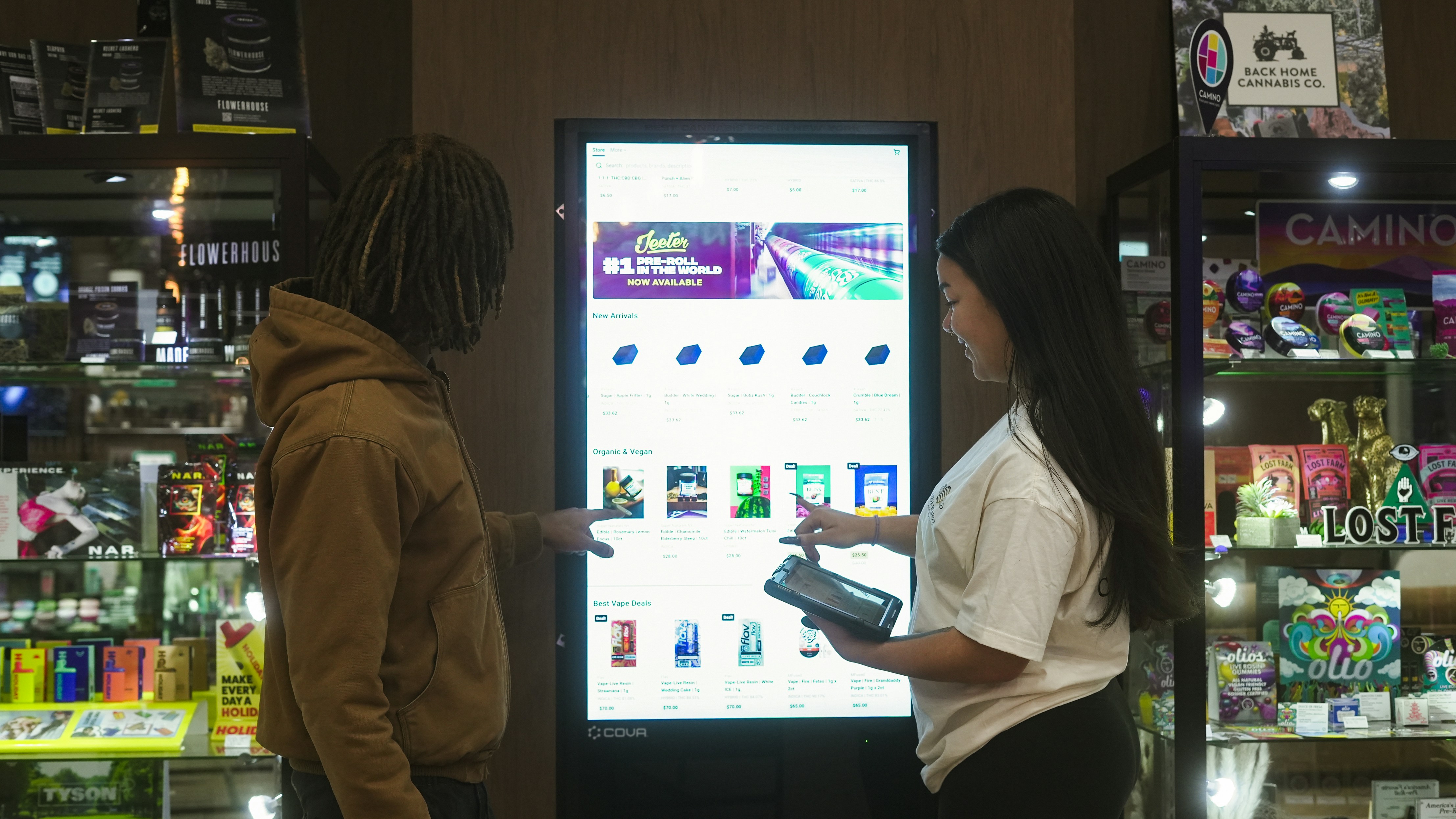
GS1 estimates that the transition has already begun in 48 countries representing 88% of global GDP.
While 2027 is not a “hard switch‑off” date for linear barcodes, GS1 recommends that brands begin the transition using dual marking — adding a 2D code alongside the existing EAN/UPC barcode. Without preparation, companies could face:
-
Inability to print readable 2D codes due to outdated systems
-
Scanning failures at retail POS
-
Disruption of supply chain operations
-
Lost marketing and traceability opportunities
And importantly, retailers and distributors are increasingly demanding 2D‑readable packaging. Partners who move late may find packaging changes forced upon them by the market, not just regulation.
Key takeaway: Transitioning now — even with dual marking — gives you future‑proof packaging and avoids costly retrofits under commercial pressure.
PPWR: The Packaging‑Specific Mandate
In parallel with DPP and Sunrise 2027, the Packaging and Packaging Waste Regulation (PPWR) — Regulation (EU) 2025/40 — introduces mandatory labelling and data requirements specific to packaging itself.
Key PPWR Deadlines for Packaging
| Deadline | Requirement |
|---|---|
| 12 August 2026 | PPWR core regulations apply; mandatory PFAS limits for food‑contact packaging; void space ≤ 40% |
| 1 January 2027 | Digital identifiers (e.g., QR codes) become mandatory |
| 12 August 2028 | EU‑wide harmonized material composition labelling |
| 1 January 2030 | Recycled content targets (30%–65%); ban on certain single‑use plastics |
Additionally, from 12 August 2026, basic labelling requirements begin, including batch or serial numbers and producer contact details. QR codes are explicitly permitted as digital information carriers, particularly for multilingual labelling across member states.
However, digital codes are not intended to replace physical labelling entirely — but they enable richer, dynamically updatable information without cluttering the package.
Key takeaway: PPWR makes QR codes mandatory for packaging from 1st January 2027 — aligning perfectly with the DPP’s digital access requirements. Smart packaging is no longer optional.
The Challenge for SMEs: It’s Not the Code, It’s the Data Behind It
For the thousands of export‑oriented SMEs across Italy and Europe, these converging regulations present a significant operational challenge. It is not simply about printing a QR code. The real difficulty lies in managing the data that sits behind it.
A QR code that links to a static web page with outdated information is not only useless — it is a compliance risk. Regulations evolve. National waste separation symbols differ from country to country. Material declarations must be truthful and verifiable. And when a regulation changes, updating physical packaging would normally require costly, urgent reprints, delayed shipments, and logistical chaos.
Furthermore, as supply chains become more digitally integrated, trading partners — retailers, distributors, recyclers, authorities — will expect real‑time access to structured, verified product data. Those unable to provide it risk being excluded from key markets, not because their product is inferior, but because their packaging cannot “speak” the new digital language of compliance.
As Lara Botta, Vice President of BOTTA EcoPackaging, notes:
“For many SMEs, the challenge isn‘t printing a code, but managing the data behind it.”
The Solution: iQRcode™ by BOTTA EcoPackaging
Recognizing this challenge, BOTTA EcoPackaging has developed iQRcode™ — a dynamic, intelligent QR code system designed specifically to make compliance simple, scalable, and sustainable.
What is iQRcode™?
iQRcode™ is not a static QR code. It is a smart QR system where each printed code is uniquely associated with a centrally managed digital card for that specific package.
When scanned, iQRcode™ does not point to a simple web page. It delivers organized, structured, and automatically updatable information customized to the needs of the scanner — whether a consumer, a recycler, or a market surveillance authority.
Information can include:
-
Disposal instructions with country‑specific symbols
-
Material composition and recyclability data
-
User instructions and safety information
-
Batch/lot numbers, expiration dates — fulfilling PPWR requirements
-
Direct links to the DPP were required by ESPR
How iQRcode™ Solves the Compliance Puzzle
| Challenge | How iQRcode™ Solves It |
|---|---|
| Regulations change frequently | Update data centrally — all existing packages instantly show new information without reprinting |
| Different countries, different rules | One printed code. Dynamic backend. Each region sees the relevant local info. |
| Multiple codes clutter packaging | One iQRcode™ replaces multiple static codes, freeing space for branding |
| DPP + PPWR + GS1 requirements | iQRcode™ is designed to meet all three frameworks simultaneously |
| IT complexity for SMEs | No complex integrations — a straightforward, manageable system |
In case of a regulatory update, you simply update the data in the central platform, and every single package already distributed — even those already on store shelves — will automatically display the new information at the next scan. The risk of non‑compliance drops dramatically. The need for urgent, costly reprints disappears.
As BOTTA EcoPackaging’s Vice President Lara Botta explains: “Packaging is becoming part of the compliance infrastructure. The identifier printed on a box will increasingly connect logistics, regulatory documentation, and environmental information.”
The Competitive Advantage of Early Adoption
Companies that wait until the last moment will face concentrated, costly adjustments: packaging redesigns, document updates, system integrations, and compliance checks — all under commercial pressure from partners who are already ready.
In contrast, early adopters gain significant advantages:
-
Regulatory peace of mind — your packaging is always compliant by design
-
Market access — retailers and partners prefer 2D‑ready packaging
-
Brand transparency — consumers can access detailed product information, building trust
-
Operational efficiency — no reprints, no recalls, no urgent re‑engineering
-
Sustainability — dynamic digital information means less physical waste from obsolete labels
As the European Commission moves forward with the ESPR working plan, and as the PPWR’s 2027 mandatory QR code deadline approaches, managing packaging data is becoming an operational variable, not merely a technical one.
From Barcode to Backbone
The transition from linear barcodes to 2D QR codes is not a packaging refresh. It is a foundational shift in how product data moves through the supply chain.
For manufacturers, exporters, and brand owners exporting to Europe, the choice is no longer whether to adopt smart packaging, but when — and how well you manage the data behind the code.
With over 79 years of experience in sustainable corrugated packaging, BOTTA EcoPackaging is committed to helping our customers navigate this transition seamlessly, without compromise on sustainability, design, or efficiency.
iQRcode™ is our answer: one printed code, infinitely updatable, always compliant. It is packaging as compliance infrastructure — ready for the Digital Product Passport, ready for GS1 Sunrise 2027, ready for the future of European regulation.
Ready to Make Your Packaging Future‑Proof?
Contact BOTTA EcoPackaging today to discover how iQRcode™ can turn your packaging into a compliance asset.
Email us at ecopack@botta.it
Learn more: www.botta.it/en/iqrcode/