

Packaging is no longer just about getting a product from A to B. With the introduction of the Packaging and Packaging Waste Regulation (PPWR), it has become a question of compliance, efficiency, and long-term viability. Many businesses are now re-evaluating a long-standing default: the use of plastic bubble mailers.
Are Corrugated Mailers Better Than Bubble Mailers?
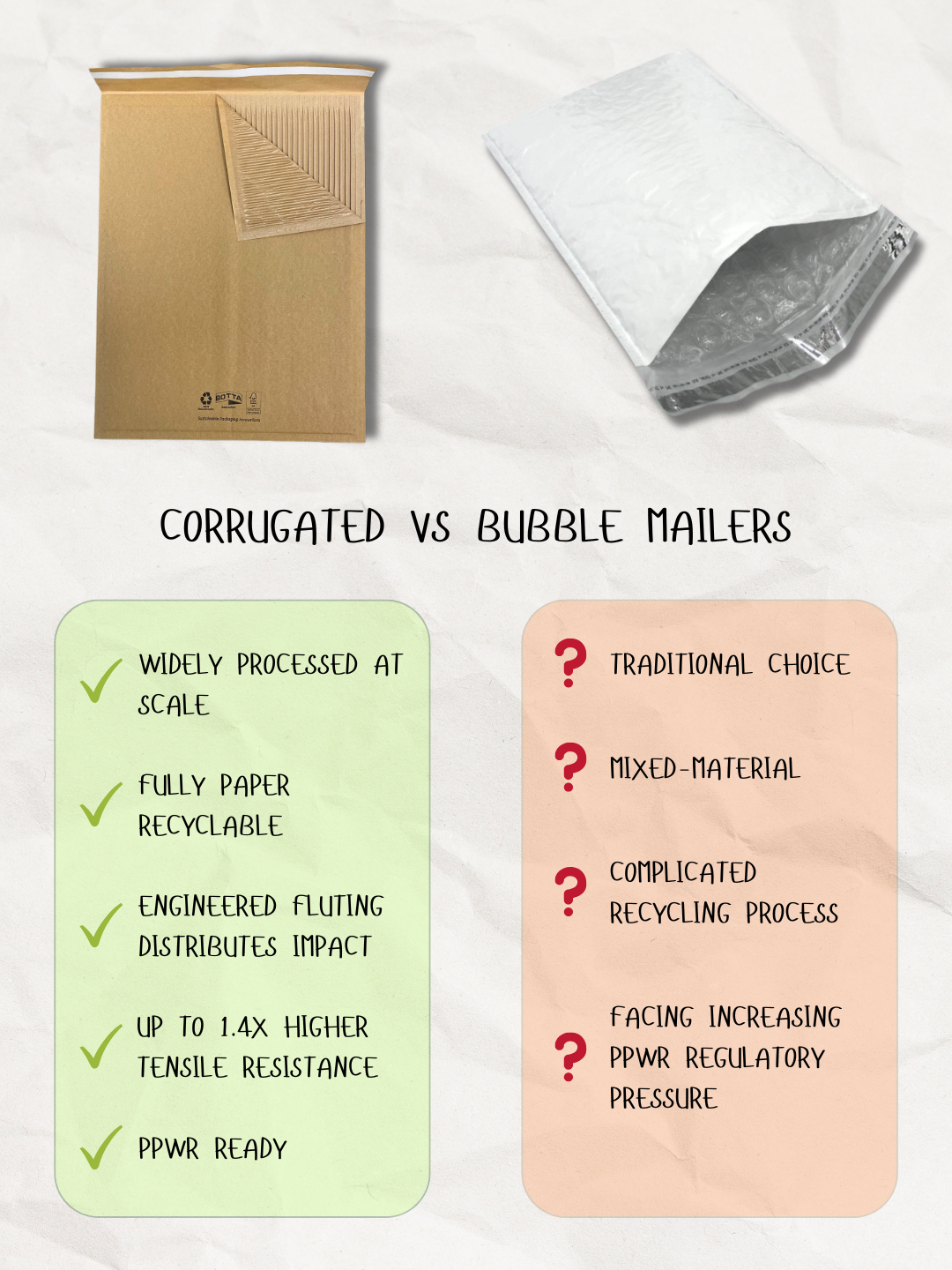
Corrugated mailers are increasingly considered superior to bubble mailers because they offer comparable or better protection while being fully recyclable and aligned with EU PPWR regulations.
Laboratory testing shows corrugated paper-padded mailers can achieve up to 1.4x higher tensile resistance compared to bubble mailers. Instead of relying on air cushioning, corrugated structures distribute impact through engineered fluting, reducing damage risk during transit.
In practice, this means corrugated mailers can reliably protect items such as books, documents, and small goods without increasing material complexity. For most e-commerce applications, they meet, and in some cases exceed, the performance expectations typically associated with plastic solutions.
How PPWR Affects Packaging Choices
What is changing most rapidly is not material performance, but the context in which packaging is evaluated. The PPWR framework shifts the focus from “can this be recycled?” to “will this realistically be recycled at scale?”
Bubble mailers struggle under this lens. Their mixed-material composition makes them difficult to process within existing recycling systems, which often leads to disposal rather than recovery. As regulations tighten, this gap between theoretical and actual recyclability becomes a liability.
Corrugated mailers, on the other hand, are inherently aligned with these requirements. Their paper-based structure fits directly into established recycling streams, making them a more reliable option in a system that increasingly prioritises circularity over convenience.
Sustainability and Operational Impact in One Decision
Switching to corrugated mailers is often framed as a sustainability move, but its impact goes further into operations and brand positioning.
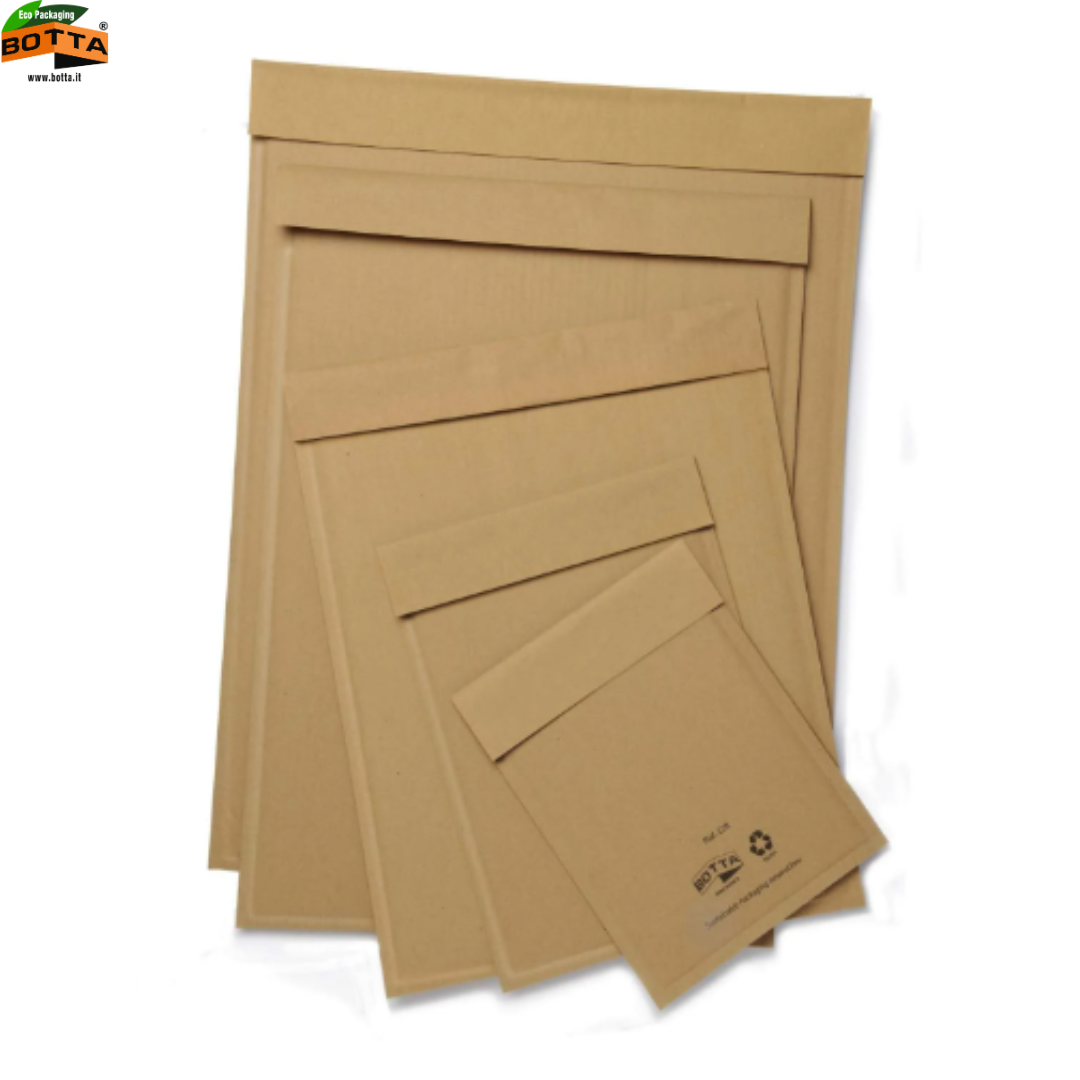
From an operational standpoint, paper mailers are easier to store, stack, and label. Their flat format improves space efficiency, while their surface allows for direct printing or writing without additional materials. These are small improvements individually, but at scale they contribute to measurable efficiency gains.
From a sustainability perspective, the advantage is clearer. Corrugated mailers are widely recyclable and often sourced under certifications such as the Forest Stewardship Council, ensuring responsible material sourcing. This creates a consistent story, from production to disposal, that is increasingly important to both regulators and customers.
What Are the Business Benefits of Switching to Paper Mailers?
The comparison between corrugated and bubble mailers is no longer simply about choosing one product over another. It reflects a broader shift in how packaging is expected to perform—not only during transit, but across its entire lifecycle.
Businesses that continue to rely on plastic-heavy solutions may find themselves facing increasing regulatory pressure and shifting customer expectations. Those that transition earlier position themselves with fewer compliance risks and a clearer sustainability narrative.
At BOTTA EcoPackaging, we see this transition not as a constraint, but as an opportunity to design packaging that works better on every level, i.e., protection, recyclability, and operational efficiency.
If you are evaluating how to align your packaging with upcoming regulations while maintaining performance, this is the right moment to reconsider your materials.